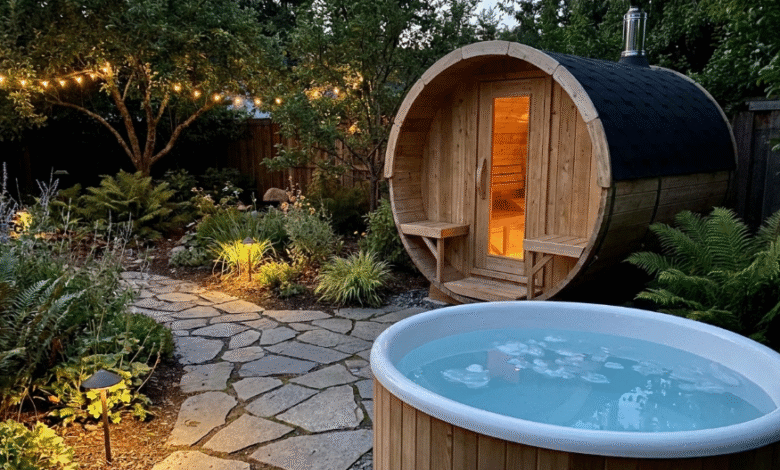
A couple or two housemates planning to use a sauna every single day get the most out of a cabin sized specifically for two rather than for guests, a heater that recovers quickly between back-to-back sessions, and a routine built around whichever pattern, together or staggered, actually fits both people’s schedules most days of the week. Daily use changes the math compared with occasional use: heat-up speed, recovery time, and the friction of the walk to the door end up mattering more than raw size or heater output.
The Household This Setup Is Actually Built For
Picture two people with overlapping but not identical schedules, one who trains early and wants a session before work, another who prefers to unwind after dinner, with maybe two or three evenings a week where both want to go in around the same time. That pattern, more than a fixed “his and hers” schedule, is the realistic daily-use case most two-person households actually live, and the setup that serves it well needs to handle both a quick solo session and an occasional shared one without either person feeling like they are working around the equipment.
What Happens When Both People Want a Session Back to Back?
This is the detail most buying guides skip. If one person finishes a session and the other wants to go in right after, a heater that was sized correctly for the cabin barely loses temperature in the few minutes the door is open for the swap, and recovers to full heat within a couple of minutes once it closes again. A heater that was undersized to save money on the purchase, by contrast, can take considerably longer to climb back to target temperature, which turns a quick back-to-back routine into an annoying wait that eventually trains one person to just skip their turn. Sizing the heater to the cabin’s actual cubic volume, with a little headroom rather than the bare minimum, pays off specifically in this daily, back-to-back scenario.
Sizing the Cabin for Two, Not for Occasional Guests
A cabin built generously for two, rather than one stretched to fit three or four for the rare gathering, heats faster and costs less per session, both of which compound meaningfully across 300-plus sessions a year rather than the handful a lightly used sauna sees. If guest capacity matters occasionally, a modestly larger unit still works for two on a normal day; the mistake is buying a cabin sized primarily around an occasional use case and paying the daily heat-up and running cost penalty for it the other 350 days of the year.
Why a Two-Tier Bench Matters More for Daily Users
Two people sharing a sauna every day, rather than occasionally, are far more likely to want different heat intensities on a given day depending on how they slept, how hard they trained, or simply personal preference that shifts day to day. A two-tier bench lets each person choose upper or lower without touching the thermostat, which removes a small daily negotiation that, repeated often enough, becomes its own small source of friction. This matters less for a household that saunas together once a month and matters quite a bit for one doing it most nights of the week.
Building a Routine That Survives a Genuinely Busy Week
Setups that actually get used daily tend to share a low-friction routine: a towel already by the door, water that lives in the space permanently rather than being fetched each time, and a heater that starts on a schedule or a simple remote rather than requiring someone to walk out and manually switch it on twenty minutes ahead. None of that is about the sauna itself; it’s about removing the small decisions that make skipping a session the path of least resistance on a tired Tuesday. Couples who stop using an expensive setup within a few months usually did not buy the wrong unit, they just never built the habit around it. Comparing cabin and heater specs built for frequent daily cycling, rather than occasional weekend use, is worth doing directly on a retailer’s product pages, and Sweat Decks lists heater recovery and duty-cycle information alongside the usual dimensions for exactly this reason.
What Does This Setup Actually Cost to Keep Running Daily?
Running cost matters more here than for occasional use, since a small per-session expense multiplied by daily use adds up over a year in a way it never does for a sauna used twice a month. A right-sized heater for a two-person cabin, used efficiently with prompt door closing and reasonable session lengths, keeps that daily cost modest and predictable, which is one more reason avoiding an oversized cabin pays off financially as well as practically for a true daily-use household.
What Does the Research Actually Support for a Daily Two-Person Habit?
The strongest cohort research on sauna bathing and cardiovascular outcomes specifically studied frequent, habitual users, often four to seven sessions a week, which lines up closely with the daily or near-daily pattern this setup is built around. A 2018 review in Mayo Clinic Proceedings and a separate systematic review both describe cardiovascular associations tied to that kind of sustained, regular use, and a review focused on heat and cold effects on the body reaches a similar conclusion. None of this research distinguishes between solo and shared sessions, so two people using the same cabin daily, whether together or staggered, both plausibly fall within the pattern the research actually measured, more so than an occasional user squeezing in a monthly session ever would.
Frequently Asked Questions
Should two daily users sauna together or separately? Either works. Sharing saves total heating time across a week; separate sessions let each person pick their own length and temperature.
How long does a heater need to recover between two back-to-back sessions? A well-sized heater typically needs only a few minutes. An undersized one can take considerably longer.
Is a bigger cabin better for two people using it daily? Not necessarily. A cabin sized for two, not guests, heats faster and costs less per session across daily use.
What breaks a daily two-person sauna habit most often? Friction, not the equipment. Slow heat-up, a cluttered path, or one person always waiting erodes the habit fastest.
References
- Cardiovascular and Other Health Benefits of Sauna Bathing: A Review of the Evidence, Mayo Clinic Proceedings, 2018
- Clinical Effects of Regular Dry Sauna Bathing: A Systematic Review, Evidence-Based Complementary and Alternative Medicine, 2018
- Effects of heat and cold on health, with special reference to Finnish sauna bathing, American Journal of Physiology, 2018